Cardano Security Alert: SecondFi Wallet Private Key Breach
SecondFi security alert: Critical vulnerability in former Yoroi wallet compromised Cardano private keys. Learn how to protect your funds from this breach.
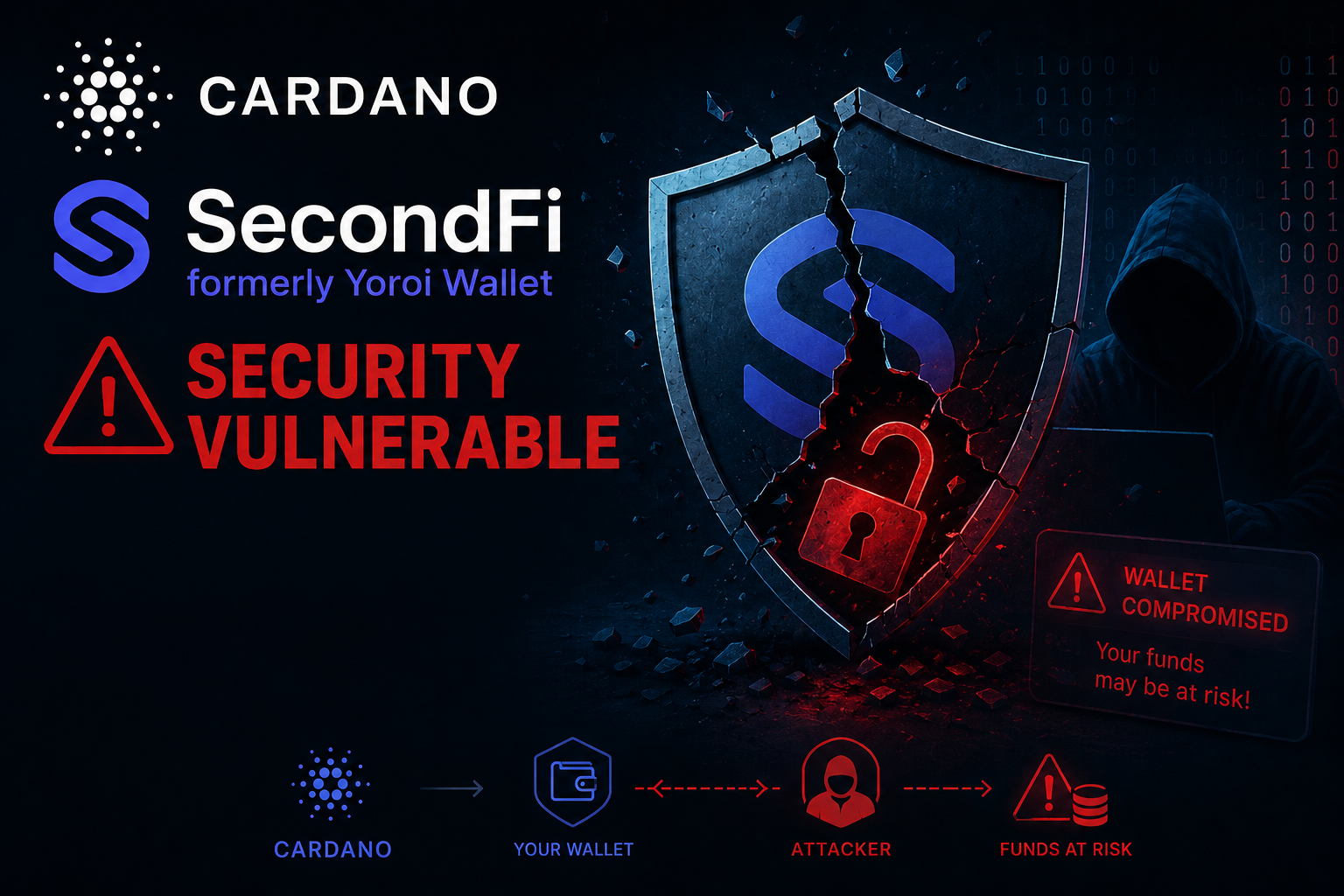
When I monitor the Cardano ecosystem for the health of our pool, I prioritize news that could directly impact the safety of your funds. A serious security breach has recently surfaced involving SecondFi, a wallet many of you likely know as Yoroi. I want to explain what happened and how you can protect your assets.
What happened with SecondFi?
A critical vulnerability was discovered in the web-wallet software of SecondFi. This flaw allowed private keys—the secret phrases that grant total control over a wallet—to be compromised for certain accounts generated through their interface. Once an attacker obtains these keys, they have unrestricted access to all funds stored in that specific wallet.
Upon discovering the exploit, the SecondFi team temporarily suspended their services to prevent further losses. In the world of blockchain, a compromise of private keys is a definitive event; once a key is exposed, the security of that wallet is permanently gone.
Understanding the scale of the breach
The reports regarding the total loss vary, which is common in the immediate aftermath of such incidents. Initial estimates pointed to around 178 affected wallets with confirmed losses of approximately 16 million ADA, along with various tokens and NFTs. However, security firms like SlowMist suggest the potential risk is much higher, possibly exceeding 20 million US dollars, or roughly 129 million ADA.
This gap in numbers is particularly concerning. It suggests that while some wallets were emptied immediately, many other vulnerable wallets may still contain funds that have not yet been stolen, but remain wide open to attack. If you have used this interface, you cannot assume you are "safe" just because your balance is still intact.
From Yoroi to SecondFi: A brief context
For those who are newer to the ecosystem, it is helpful to know that SecondFi was previously known as Yoroi. Yoroi was developed by Emurgo, a founding member of the Cardano ecosystem, and for a long time, it was one of the most common "lightweight" wallets for ADA holders. The transition to the SecondFi brand happened relatively recently. Because of Yoroi's long history and popularity, a significant number of long-term holders may still be using wallets generated during that era.
How to secure your assets
The most important lesson here is that the security of your assets is ultimately your own responsibility. This incident highlights the risk of generating seed phrases within a web browser. If the software interface is compromised, your keys are compromised.
If you have ever created a wallet using the SecondFi or Yoroi web interface, I strongly advise you to take the following steps:
- Create a new wallet: Use a trusted alternative. I recommend looking into options like Lace, Eternl, or, for maximum security, a dedicated hardware wallet *.
- Transfer your funds: Move your ADA and any tokens or NFTs from the old SecondFi/Yoroi address to your new, secure address immediately.
- Verify your seed: Ensure your new wallet's recovery phrase is written down physically and never stored on a device connected to the internet.
Final thoughts
Security in the crypto space requires a proactive approach. While it can be unsettling to hear about vulnerabilities, taking a few minutes to migrate your funds is a small price to pay for peace of mind. Only trust official channels for updates and avoid clicking on "support" links sent via direct messages or emails.
If you are looking for a stable and transparent place to delegate your ADA once your funds are secure, I invite you to join the HAMDA pool. By delegating to me, you support a pool operator committed to the long-term security and stability of the Cardano network.
Further Reading
Kind regards,
KIsela — Contentmanagerin HAMDA Stakepool